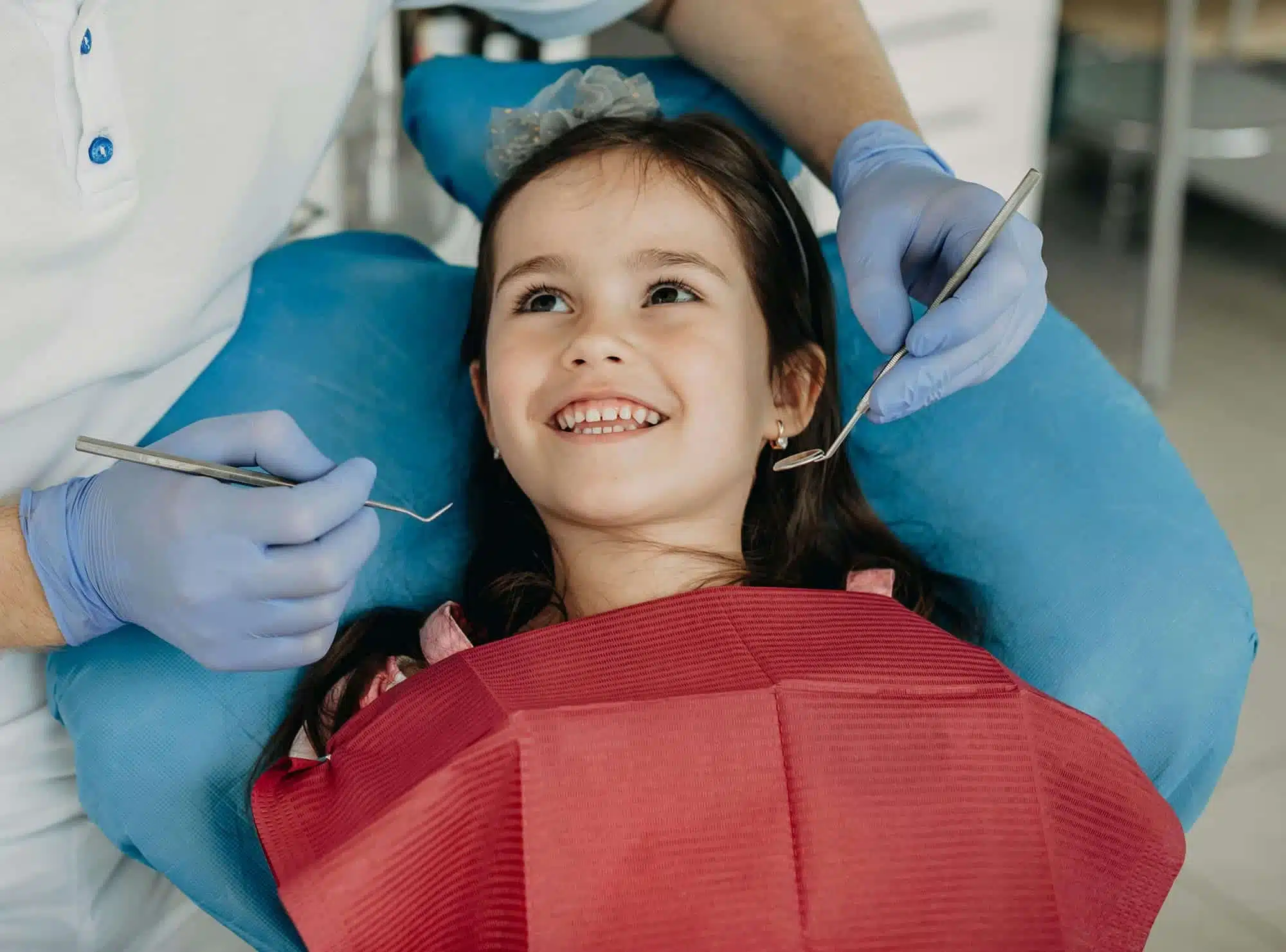
Many parents assume orthodontics starts in middle school, when kids begin getting braces. So it can be surprising to learn the recommended answer to when should my child see an orthodontist is much earlier: by age 7. Here is why that age matters, what happens at the visit, and why most children who come in at 7 do not start treatment right away.
Why Age 7?
The American Association of Orthodontists recommends that every child have an orthodontic check-up no later than age 7. By then, the first permanent molars and front teeth have usually come in. That gives an orthodontist enough information to see how the jaws are growing, whether there will be room for the remaining permanent teeth, and whether the bite is developing normally.
It is also an age when the jaw is still actively growing. Some problems, such as a narrow upper jaw or a crossbite, are far easier to guide now than to correct once growth is finished. The AAO explains this in its guide to orthodontics for children.
Signs Your Child Should Be Seen Sooner
You do not need to wait for a birthday if you notice any of these:
- Crowded, overlapping, or crooked front teeth
- Baby teeth lost much earlier or much later than usual
- Upper teeth that close inside the lower teeth (crossbite)
- Front teeth that stick out or do not meet
- Lower teeth that close in front of the upper teeth (underbite)
- Mouth breathing, snoring, or thumb sucking after age 5
- A jaw that shifts sideways, clicks, or pops when your child bites
What Happens at the First Orthodontic Visit
The first visit is quick, gentle, and does not involve any treatment. The orthodontist will:
- Look at how the teeth and jaws fit together
- Check how permanent teeth are erupting and whether there is space for the rest
- Take photos or x-rays if they are needed
- Talk with you about habits, breathing, and your child’s growth
Most visits take under half an hour. You will leave with a clear answer: everything looks on track, we should keep an eye on something, or early treatment would help now.
Most Kids Do Not Need Treatment Yet
An early visit is not a commitment to braces. In fact, the most common outcome is a plan to simply check again in six to twelve months. Children who do benefit from early care usually have a specific structural issue, such as a crossbite or severe crowding, that is easier to fix while the jaw is growing. This short first phase is called Phase I or interceptive treatment.
The benefit of going early is information. When you know what is coming, you can plan for it, and you will not miss the window when a simpler fix is still possible.
How to Prepare Your Child for the Visit
Most kids feel more relaxed when they know what is coming. Tell your child the orthodontist will count and look at their teeth, take a few pictures, and maybe ask them to bite together. Avoid words like “shot” or “hurt,” since nothing uncomfortable happens at a first evaluation. Bring a list of questions, any recent x-rays from your child’s dentist, and notes on habits like thumb sucking or snoring. The visit goes faster, and you leave with clearer answers.
What About the Family Dentist?
Your child’s dentist checks the teeth at every cleaning and may refer you to an orthodontist if something looks off. But a board-certified orthodontist has additional years of specialty training in jaw growth and bite development. At Sunset Children’s Dentistry, your child’s pediatric dentist and orthodontist work in the same office, so growth checks can happen alongside routine visits.
Schedule Your Child’s Age-7 Check
If your child is 7 or older and has never had an orthodontic evaluation, now is a good time. Families from Lexington, West Columbia, Red Bank, Oak Grove, and Gilbert can book a free visit with our board-certified orthodontist. Learn more about early orthodontic treatment for kids.