Guiding Jaw Growth Before the Window Closes
A palatal expander for kids is a small appliance fitted to the roof of the mouth that gently widens the upper jaw over a few months. It is the best-known tool in dentofacial orthopedics — the part of orthodontics concerned with the bones of the face and jaw, not just the teeth sitting in them.
It works because a child’s upper jaw is still two halves joined by a growth suture that has not yet fused. Widen it now and the body fills in new bone. Wait until the late teens and the same correction usually requires surgery.
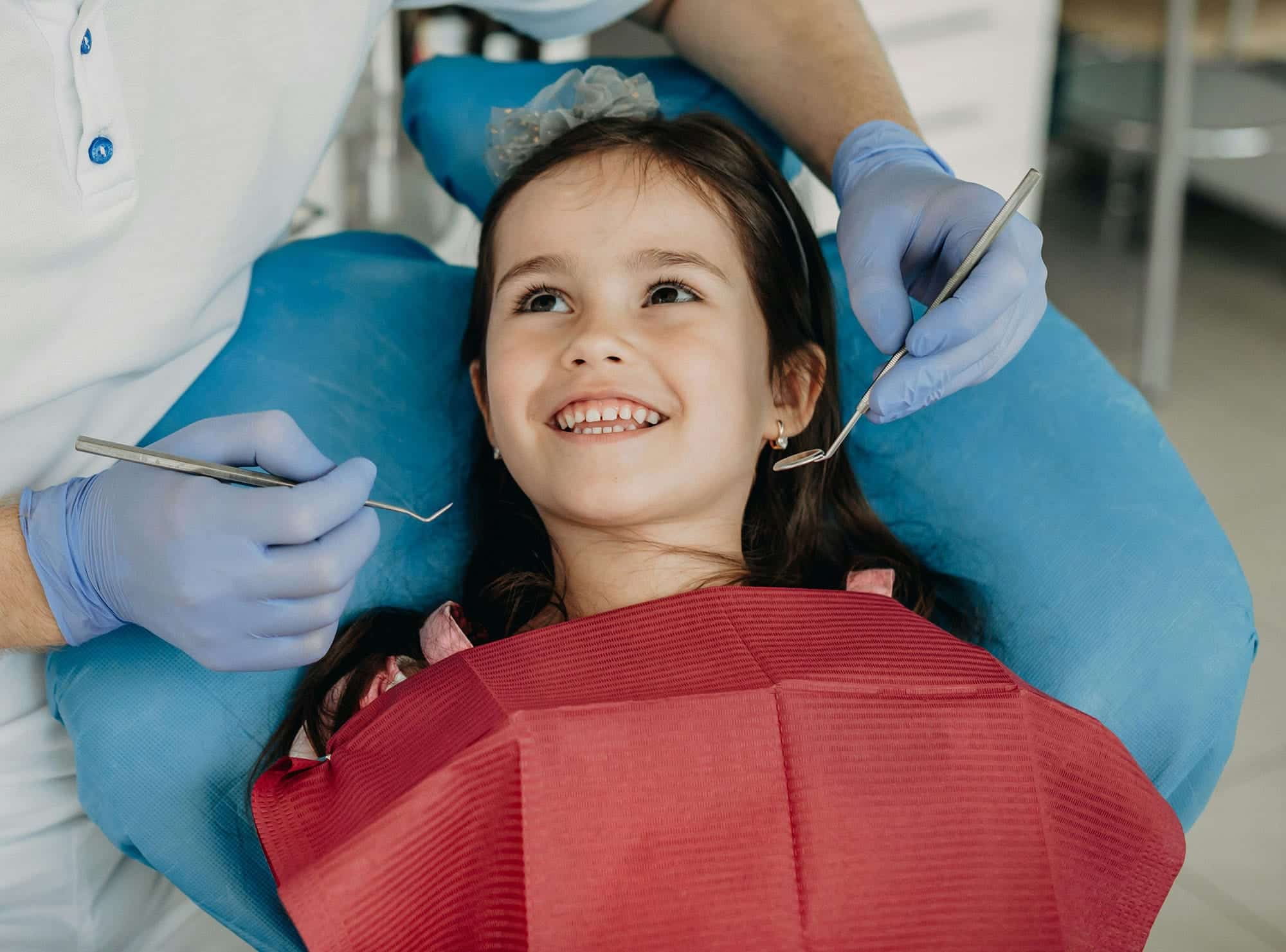
What a Palatal Expander for Kids Actually Does
Parents usually arrive worried about crowded teeth. Often the real issue is a jaw that is too narrow for the teeth that are coming. Expansion addresses the cause instead of rearranging the symptom.
Treatment is short. Active widening typically takes three to six months, followed by a holding period while new bone stabilizes.
- Creates real arch space: frequently reducing or removing the need to extract permanent teeth
- Corrects crossbites: stopping the jaw from growing off-center
- Can improve nasal airflow: widening the palate also widens the nasal floor
- Works with the body’s own growth: not force, but guided development
- Short active phase: most expansion is complete within a few months
- Age-dependent: most effective before the palatal suture fuses in the mid-teens

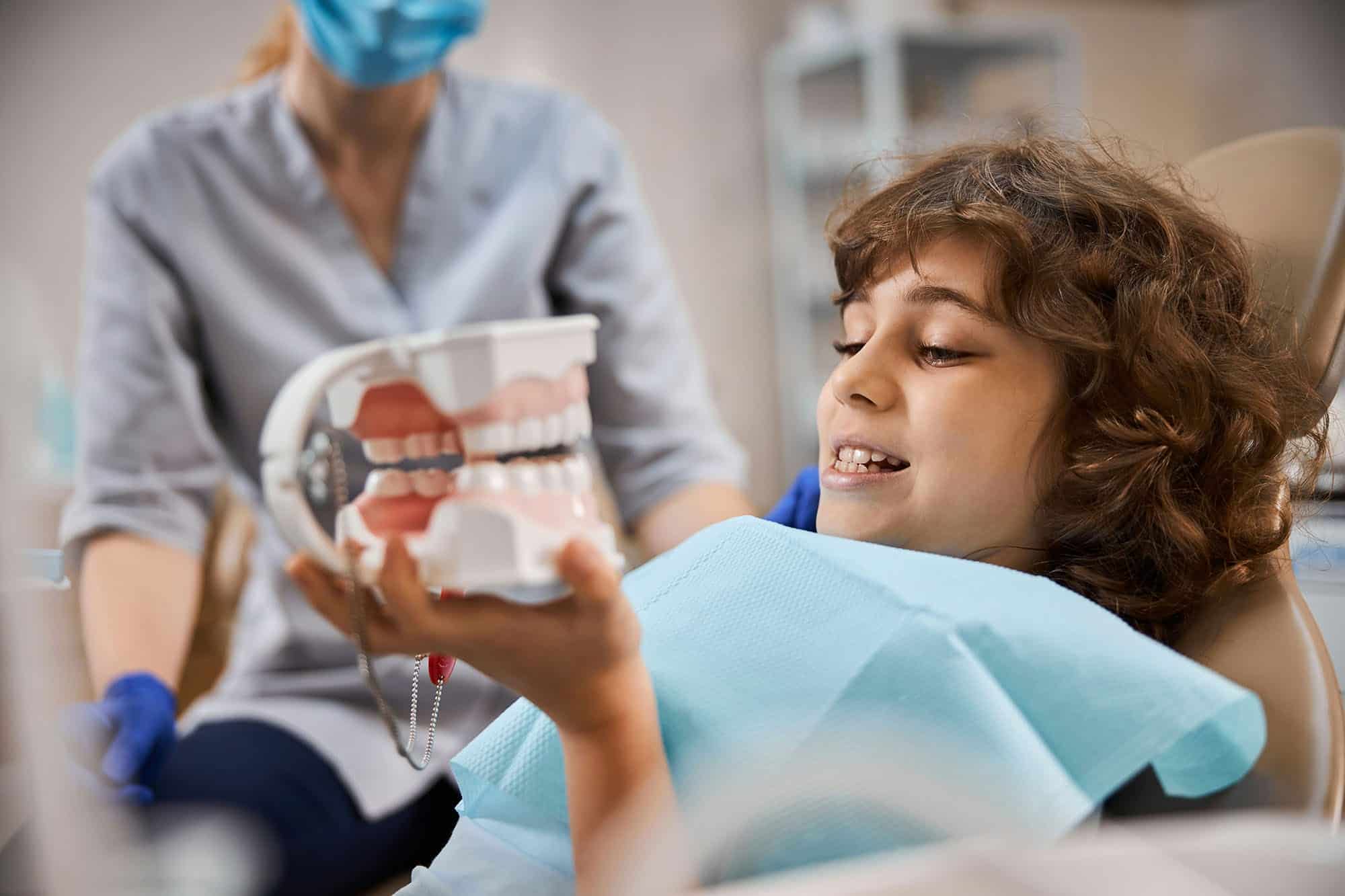
Learn More About Dentofacial Orthopedics at Sunset Children’s Dentistry
Expanders are the most common orthopedic appliance, but not the only one. Which appliance your child needs depends on which bone is out of position.
STEP 1
Evaluation and Records
We measure arch width, check for crossbite, and take a 3D scan. This visit determines whether expansion is appropriate and whether your child’s growth timing still supports it.
STEP 2
Fitting the Appliance
The expander is custom-made and cemented to the upper molars in a short appointment. There are no shots and no drilling. Most children describe it as feeling bulky rather than painful.
STEP 3
Turning at Home
You will turn a small key once or twice a day for several weeks, and we will show you exactly how before you leave. Children feel pressure for a few minutes after each turn. A gap often opens between the front teeth — this is expected and closes on its own.
STEP 4
Holding and Removal
Once the target width is reached, the expander stays in place for several months while new bone fills the suture. Removal is quick and painless. Retainers →
More Than Straighter Teeth
Orthopedic treatment changes the foundation, which is why its effects reach past appearance.
Room for Permanent Teeth
Widening the arch creates genuine space, which is frequently the difference between keeping all the permanent teeth and removing two of them to relieve crowding.
A Symmetric Bite
Correcting a crossbite early stops the jaw from habitually shifting to one side, which protects against the asymmetric growth pattern that becomes much harder to fix later.
Easier Breathing for Some Kids
Because the palate forms the floor of the nasal cavity, widening it can improve nasal airflow in children whose narrow palate contributes to mouth breathing.
Avoiding Surgery Later
The same widening that takes a few months at age nine typically requires surgically assisted expansion once the palatal suture fuses. Timing is the whole advantage.
Why Choose Sunset Children’s Dentistry for Dentofacial Orthopedics?
Orthopedic treatment is timing-sensitive and growth-dependent, which makes specialist training genuinely important. Dr. Christine Esposito’s master’s research at UNC Chapel Hill was on bone-anchored maxillary protraction — guiding upper jaw growth — and earned the American Association of Orthodontists’ Thomas M. Graber Award.
In other words, the specific question your child’s case turns on is the one she spent her research career on.
- Diplomate, American Board of Orthodontics
- Award-winning research in guiding jaw growth (AAO Thomas M. Graber Award)
- UNC Chapel Hill orthodontic residency
- Growth tracking on site alongside routine pediatric dental visits
- Conservative recommendations: appliances only when the evidence supports them
- Coordination with your pediatrician or ENT when airway factors are involved
The AAO’s overview of orthodontics for children is a useful neutral reference while you weigh options.


Dr. Christine Esposito
Board-certified Orthodontist in Lexington, SC
Frequently Asked Questions
The questions parents ask most before their child gets an expander.
Explore Costs & Affordability
Expander treatment is usually part of a Phase I plan rather than a standalone charge. We quote the full plan before treatment begins.
Payment Plans
Monthly plans spread cost across the treatment period.